
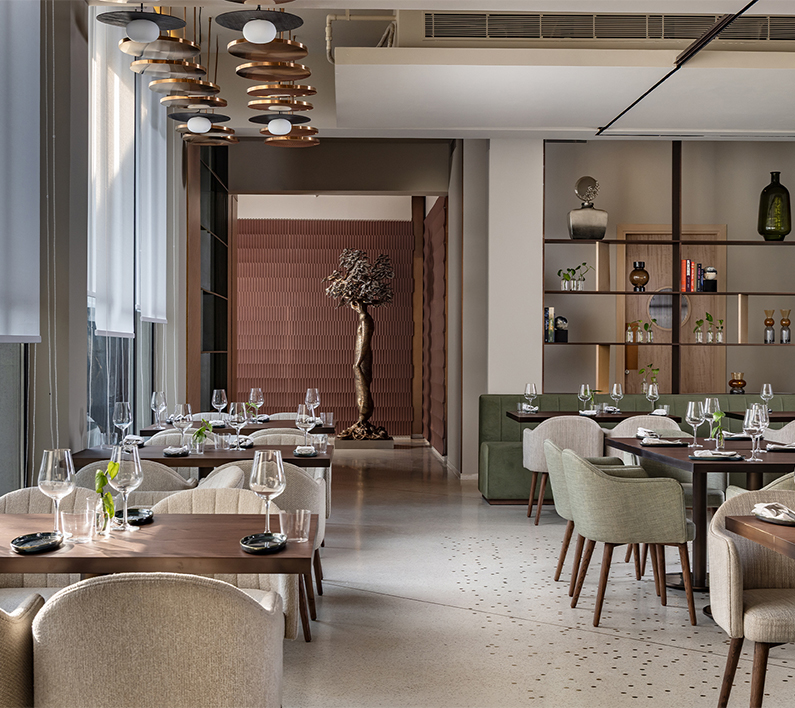
Nisaba, Chef Manish Mehrotra’s newly opened restaurant in Delhi, carries a strong sense of grounding
BY KARAN PURI
Delhi has never been short of restaurants that promise an “experience”. Yet very few offer what Chef Manish Mehrotra’s newly opened Nisaba does: a sense of pause. A moment of quiet in a city that rarely slows down.
Set inside the Humayun’s Tomb Museum complex, Nisaba sits in one of the most unexpectedly peaceful corners of Delhi. The bustle of traffic fades as you walk in. The light softens. The air feels measured. There is space to breathe even before the first glimpse of the food.
At the heart of the dining room stands a sculptural installation by artist Dhananjay Singh – an abstract form that references grain, growth and renewal. It anchors the room with quiet symbolism. Grain is sustenance, continuity and memory. That idea runs through the restaurant’s identity with a tribute to food shaped in homes, small towns, bylanes, roadside stalls and everyday kitchens that rarely receive attention.
This is the first independent restaurant by Manish after his long and defining 24-year chapter with Indian Accent. For many diners, his name carries enormous expectations. He helped reshape modern Indian cuisine in ways that influenced an entire generation of chefs. At Nisaba, he appears relaxed, assured, deeply comfortable in his own voice. The restaurant carries a personal warmth and a strong sense of grounding.
Named after the ancient goddess of grain and writing, Nisaba explores food shaped by instinct and lived memory. The menu draws from familiar flavours yet presents them with careful balance and precision. Nothing feels forced or theatrical for the sake of spectacle. The cooking speaks clearly.
The meal begins with a samosa that immediately sets the tone. Filled and paired with Moradabadi dal, buknu, and “everything chutney,” it delivers comfort with sharp intelligence. The crust is crisp and light. The seasoning carries depth. The dal brings warmth and body. Buknu, that earthy, tangy spice blend from Uttar Pradesh, adds character. Every element feels purposeful. It is deeply satisfying food, presented with clarity.
From there, the kitchen moves with confidence across regions and textures.
The mutton seekh kabab arrives with blue cheese butter and baked naan. It is an unusual pairing on paper. On the plate, it works beautifully. The blue cheese melts gently into the meat, adding richness and depth while allowing the kabab’s smoky flavour to remain dominant. The naan carries warmth and softness, grounding the dish. It feels bold yet balanced, a conversation between familiarity and surprise.
The tiger prawns with Konkan javla butter and Goan poee bread lean generously into coastal indulgence. The butter carries briny intensity. The prawns remain plump and sweet. The poee soaks everything up like a sponge built for pleasure. It is rich food, comforting and generous, yet carefully controlled.
Then comes a dish that feels deeply rooted – Motihari mutton with stewed garlic and hing sattu kachori. This is food that rewards patience. The meat is slow-cooked, tender, layered with warmth and depth. The garlic brings sweetness. The hing adds quiet intensity. The sattu kachori offers structure and texture. It feels ancestral and earthy – the kind of dish that speaks softly and stays with you long after the meal.
Even within the vegetarian selection, there is clear thoughtfulness. The Lucknow white matar tikki carries delicate spice and gentle sweetness. Herb burrata paired with lotus root and Kashmiri chilli jam balances freshness with texture. Mushroom preparations appear in different forms, showing the ingredient’s range rather than repetition.
The menu is wide yet coherent. Each dish feels part of a larger story.
The beverage programme deserves attention as well. The cocktail list reflects careful craft, with Indian botanicals, house infusions, and seasonal ingredients shaping the drinks. The zero-proof menu offers layered options for those avoiding alcohol, and they carry the same seriousness as the cocktails. The wine list is extensive and thoughtfully assembled, giving diners plenty of room to explore pairings.
The interiors reflect the food’s philosophy. Designed with warmth and restraint, the space feels calm and grounded. Bookshelves double as display spaces. Earthy tones and natural materials create a welcoming atmosphere. The lighting is gentle. Nothing competes for attention. The room invites conversation rather than performance.
Service matches the tone of the space – attentive, composed and knowledgeable without intrusion. The staff guides diners through the menu with ease and clarity. There is an understanding of rhythm here. Courses arrive at the right pace. Plates are explained with care. The experience unfolds naturally.
Then comes dessert: potato chips with vanilla ice-cream. It sounds simple. It is simple. Yet it delivers delight. Crisp, salted chips meet smooth, cold sweetness. Texture and contrast do the work. It feels playful, nostalgic and quietly clever. A reminder that pleasure often lives in uncomplicated combinations.
Nisaba carries the presence of a chef working at full command of his craft. There is no need to prove anything here. The food feels composed with assurance built from years of experience, observation and refinement.
Manish’s journey to this moment has been long and decorated. Born in Patna, trained at the Institute of Hotel Management, shaped by mentors, refined through global exposure and celebrated through numerous awards, he has built a reputation in India and worldwide. Yet at Nisaba, the cooking feels stripped of noise. It feels intimate and reflective. Focused on flavour above all else.
His founding partners, including entrepreneurs Amit Khanna and Binny Bansal, and front-of-house led by Shubham Upadhyay, have supported a vision that values thoughtfulness over scale. The restaurant sits within a heritage environment, blending food, culture and context in a way that feels deliberate and meaningful.
Dining at Nisaba feels like stepping into a chef’s memory curated, refined and shared with generosity.
Nisaba feels unmistakably like Manish himself: full of flavour, shaped by experience and guided by the quiet assurance of someone who understands exactly what he wants to say through food.
