
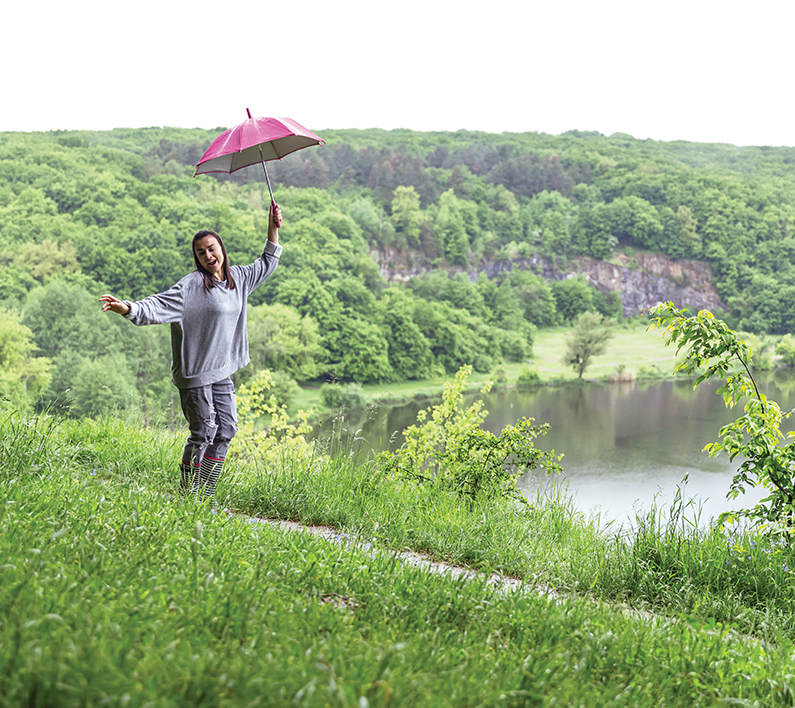
A shift in trends towards stress-free environment is wooing travellers to explore rural India
BY JANNAT KAUR WARAICH
Mahatma Gandhi once said, “The soul of India lives in its villages.” Indeed, India’s strength indeed lies in its 7,00,000 villages, its diversity and variety. The country is known for its raw form and will continue to remain like that with the richness of its cultures and resources.
When international travellers hear about India, they associate the country with only metro cities. But that’s not what India is all about, the real India can only be experienced in its roots, which is rural India. It’s tucked far away from the hustle bustle of the cities, deep in the countryside in the exteriors of mainstream destinations.
While rural tourism is responsible tourism, conscious travellers and the coming generations are in favour of experiencing it. Considering its unique and uncommon characteristics, geographic variety, differentiated experiences and concerned duties like hiring and training local people for the uplift of the local communities and the economy, use of local resources, development of infrastructure and partnerships with locals to provide traditional experiences like cooking a local meal together, going for a village walk, conducting farming or a dairy experience or even presenting a cultural show.
The actual beauty of rural tourism is found in its location, scenery, people, traditions, food, culture, seasons, local festivals, craft, textile, conservation initiatives and properties.
Visiting Pushkar and Sangla can be a good idea throughout the year but when visiting Pushkar during Pushkar Mela and Sangla during Holi, the memories and experiences are different and unexplainable.
Importantly, rural tourism has a lot more to offer than you perceive from its name. While it does include agritourism and farm-related activities as the name suggests, it also involves and focuses on eco-tourism, health, sports, adventure, heritage, wildlife or forest, art, pilgrimage, sustainable and green tourism.
The activities that rural destinations provide like farming, trekking, fishing and sightseeing have made rural tourism more appealing. There are ready examples like Karnal, known for its high quality rice agricultural production, Jaisalmer known for its desert safari and camping, Kinnaur for its Holi and scenery, Mandawa for its havelis and fresco paintings and so on.
An agritourism experience in Ramba, a village in Karnal, showcases their remarkable success of rice farming. The farmstay experience, amidst acres of lush greenery, offers the perfect blend of rural charm and luxury. The village being less commercialised, peaceful, spacious and full of positivity provides an unforgettable escape to its travellers and guests.
The farmstay services and activities offered are unique and exciting, including early morning walk in the fields, farm-to-table dining, bird-watching, tractor rides, cycling and picnic at Karna lake. Furthermore, with reliable network connectivity and complete green surroundings all around, Ramba is the perfect rural destination for better productivity, peace and countryside living.
But the reality is that rural tourism has only risen since the COVID times, with international borders being closed and limited travel options being available. With limited options available, nobody found anything better than Indian rural locations which pulled us all towards it because of its offerings. Rural tourism perhaps became a trend that gained a lot of interest as people started to enjoy the experience they were getting, which exceeded their expectations.
With the rate of global urbanisation and change in people’s lifestyle, work style and travel choices there is a shift towards remote locations far away from cities for peace, wellbeing, better health, rejuvenation, adventure activities, authentic experiences and a stress-free environment in natural surroundings. All these factors are continuing to contribute towards the rapid growth of India’s rural tourism.
Until COVID, rural tourism was never seen a major attraction and its potential remained unexplored even though few locations did well because of well-established hospitality brands in their regions like Neemrana and Jawai. But in comparison to what the rural tourism industry is today it was largely untapped.
Rural tourism was built on the principles and ideology of reducing the impact of developed cities, building respect and awareness for the local culture and regions and aid rural programmes. With the rise in the number of travellers visiting rural India each month, the number of guests staying at rural properties has also risen. This has given an impetus to hospitality entrepreneurs to start their own ventures like homestays, resorts, cafes, adventure camps, etc. in their regions.
Furthermore, existing companies have also been able to do well compared to their past analytics with their current plans and initiatives as the number of bookings rise, promising better returns on their investment.
Not surprisingly, guests at rural regions today are no longer only Indians but international travellers are also increasingly visible at these locations.
From Ladakh to Jodhpur to Ranthambore and beyond, Indian rural tourism is gaining global attention. By all accounts, real India is not found in five-star hotels; it’s in the mud homes, folk songs, and silent strength of our villages. Perhaps, it’s evident that be it domestic or international, travellers are not looking just for luxury in five-star properties but they are seeking out a stay which is culturally immersive, giving them a sense of true India.
Take Spiti Valley and Kinnaur, a rural destination in Himachal Pradesh, for example. The destination offers great local experiences from mountain climbing to celebrating Holi in a traditional way to enjoying a regional cuisine with locally sourced ingredients to trekking and camping. The accommodations are comfortable and affordable, making it an ideal destination for experiencing the local culture and way of living.
The destination emphasizes on promoting tourism and hospitality in a manner which gives its travellers and guests an experience and view of the traditional Himachali lifestyle and culture. While technology remains a crucial part of travel and hospitality, the rooms here are not well equipped with advanced technology which helps travellers disconnect from stress and connect with nature.
Strong marketing activities are promoting Indian rural tourism and initiatives taken by the government are influencing more people to experience rural tourism. But that’s not all. Things are fast changing in rural India and travellers can easily find better connectivity, transportation, safety and technology facilities like wifi, online payments, virtual reality, etc. making rural tourism stronger and safer than ever.
In sum, the shift in trends towards the rise of leisure lifestyle and a stress-free environment is what is fueling its growth. As a result, the outlook for rural tourism seems very bright.
