
How India’s most amazing restaurateur Zorawar Kalra finally brought globally acclaimed chef Gaggan Anand to India
INTERVIEW BY RASHMI UDAY SINGH
I have watched Zorawar Kalra grow into India’s most amazing restaurateur. I knew his father the legendary Jiggs Kalra (the “Ideas Millionaire”) but it was his son Zorawar, who took the company to another level and who has been building Indian restaurant concepts with the confidence to travel beyond India. Masala Library. Farzi Café. Pa Pa Ya. Made in Punjab. Different expressions of the same conviction: Indian food can be rooted here and still belong on the world stage.
Gaggan left India and spent two decades challenging how the world saw Indian food. Zorawar stayed home and built Indian restaurant brands that travelled around the world. Different cities. Different journeys. A remarkably similar refusal to stand still. rāga is where those journeys meet.
You have always trail-blazed with your restaurants. What made you think of bringing Gaggan to India?
For me, it started with one dinner. My wife Dildeep and I went to Gaggan in Bangkok. I knew Gaggan, of course, and had followed his journey for years, but I had never experienced the restaurant quite like that. By the end of dinner, both of us actually stood up and applauded. I remember thinking: India needs to experience this.
The original plan for the Janpath space was something entirely different. But after that dinner, I called Gaggan and asked him to come and see it. He came to Delhi within days, loved the location, and things moved very naturally from there.
It wasn’t really a calculated business decision. It began with genuine admiration for what he had created and a belief that the time was finally right for Gaggan to have a permanent restaurant in India.
How long did it take to finalise the project?
The idea came together surprisingly quickly, but building rāga took a little longer.
Gaggan saw the space very soon after that Bangkok dinner and we more or less decided to do it on a handshake. There wasn’t months of negotiation before we decided we wanted to work together.
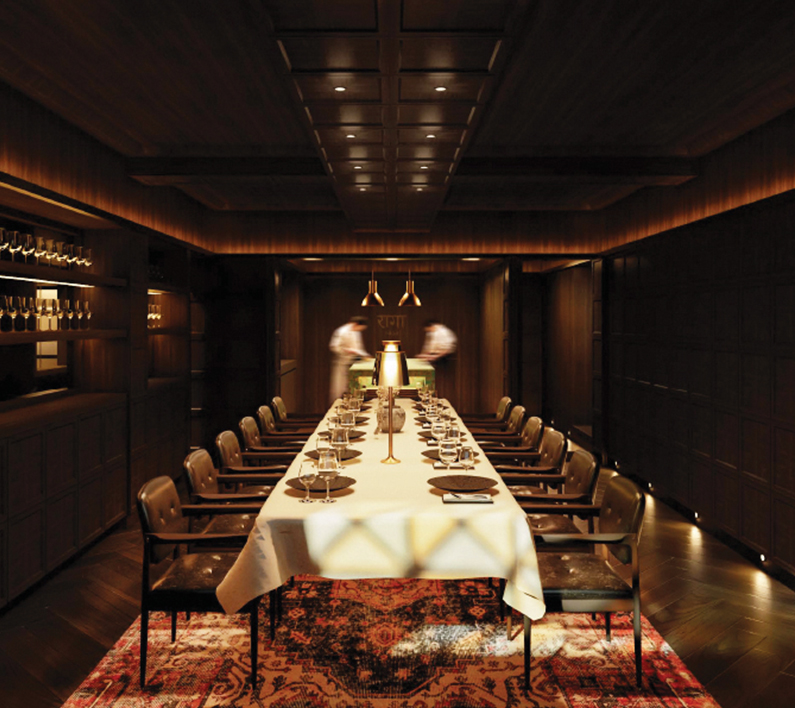
After that came the real work: creating the restaurant, developing the menu, bringing Rydo to India, designing the experience, travelling together to source crockery and cutlery, and making sure this was not simply Gaggan Bangkok transported to Delhi.
What do you think of Gaggan? And of Gaggan’s food?
Gaggan is one of those very rare people who have the courage to constantly question his own success. Most people find a formula that works and protect it. He seems almost uncomfortable with repetition. He wants to break it, rethink it and begin again. I think that restlessness is a large part of his genius.
As for the food, the first time I properly experienced Gaggan in Bangkok, it genuinely overwhelmed me. There is obviously enormous technique behind it, but technique is never the point. A dish can make you laugh, surprise you, remind you of something you ate 20 years ago or completely confuse you before suddenly making sense. That ability to create emotion through food is extremely rare.
What are your expectations of rāga?
I want rāga to become one of the restaurants that changes the way people look at contemporary Indian dining. Not because it is expensive or theatrical, but because it shows how much more there still is to explore within Indian food.
The early response has already been extraordinary and we are truly grateful.
My expectation is that people come once out of curiosity and then want to come back because the experience keeps evolving. If rāga can remain relevant, restless and exciting several years from now, that will be the real achievement.
